Moving Walkway
February 7, 2025
Elevator counterweight
February 28, 2025
This post is also available in:
 العربية (Arabic)
  فارسی (Persian)
Gearless motors are typically synchronous or induction motors that are directly connected to the elevator’s drive system. These motors use a powerful magnetic system to ensure smooth and precise movement of the elevator car. The main components of these motors include:
Stator:
The stationary part of the motor, consisting of electrical windings that create a magnetic field to rotate the rotor.
Rotor:
The rotating part of the motor, usually made of permanent magnets. These magnets interact with the stator’s magnetic field to produce motion.
Control System (Drive System):
This includes the inverter and electronic systems that precisely control the motor’s speed and torque.
Safety Brake:
An electromechanical braking system that activates in emergencies or when the elevator stops.
Bearings:
High-quality bearings are used to reduce friction and increase the motor’s lifespan.
Advantages of Fuji Gearless Motors:
- High Energy Efficiency:
Gearless motors, due to the absence of a gearbox and mechanical friction, have higher energy efficiency (typically over 90%). This reduces electricity consumption and operational costs. - High Speed and Precision:
These motors can achieve very high speeds (up to 10 meters per second or more) and ensure smooth and precise movement of the elevator car. - Low Noise and Vibration:
The absence of a gearbox and the use of permanent magnets result in minimal noise and vibration. - Compact Design:
Gearless motors occupy less space in the machine room, making them ideal for buildings with space constraints. - Long Lifespan and Low Maintenance:
With fewer mechanical parts, gearless motors require less maintenance and have a longer lifespan. - Compatibility with Smart Control Systems:
These motors are easily compatible with advanced and intelligent elevator control systems, allowing for precise management of elevator performance.
Disadvantages of Gearless Motors:
- Higher Initial Cost:
Gearless motors are more expensive initially due to the use of advanced technology and permanent magnets. - Technical Complexity:
These motors require more expertise for installation and maintenance due to their advanced electronic systems.
Applications of Fujihd Gearless Motors:
- High-Speed Elevators:
For tall buildings such as office towers, hotels, and commercial centers. - Passenger Elevators:
In residential and office buildings where smooth and quiet operation is required. - Luxury Elevators:
For projects that demand advanced design and flawless performance. - Hospital Elevators:
Ideal for transporting patients and medical equipment due to their smooth and quiet operation.
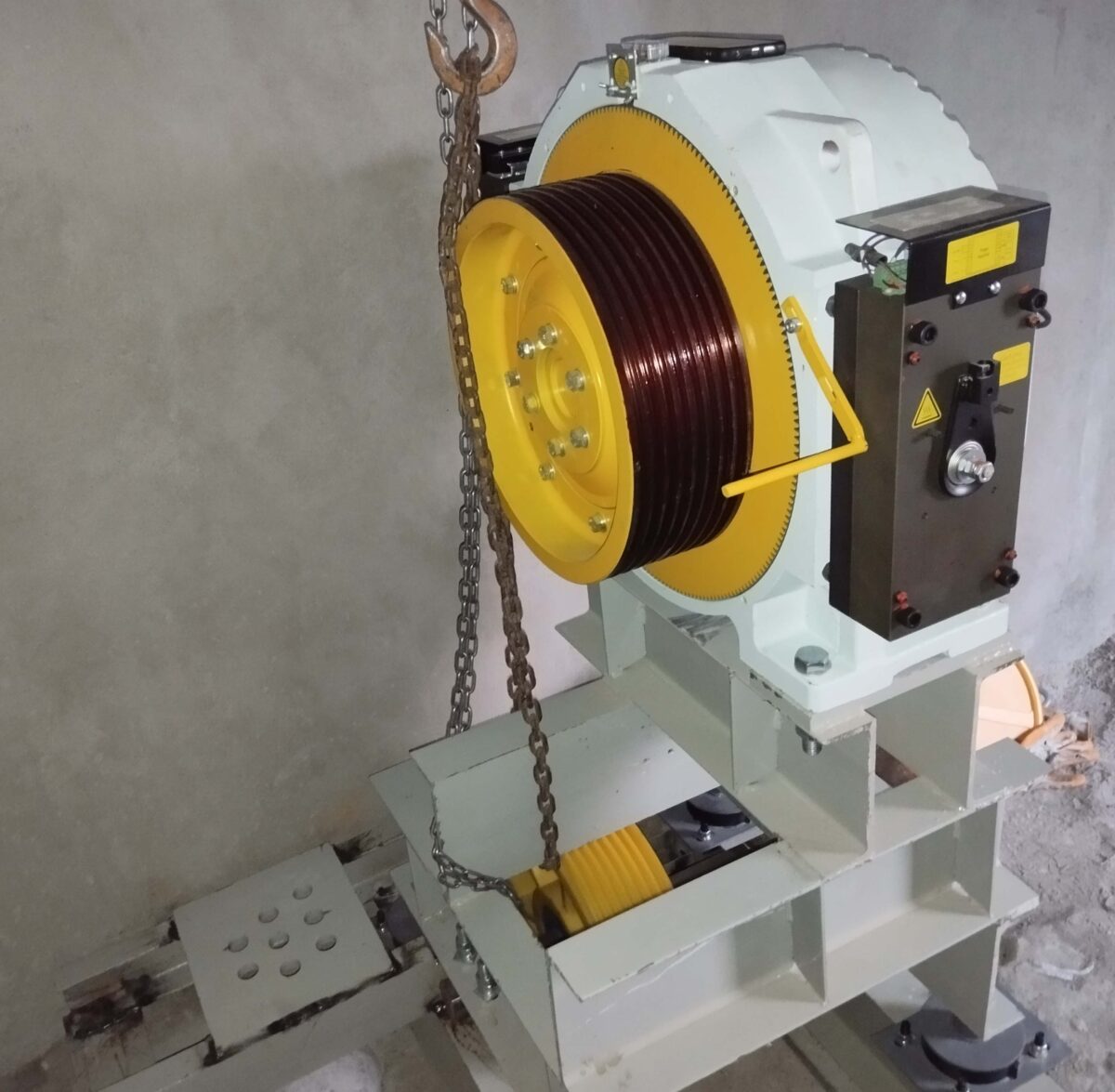
Comparison Between Gearless and Geared Motors:
| Feature | Gearless Motors | Geared Motors |
|---|---|---|
| Energy Efficiency | Very high (over 90%) | Moderate (around 70-80%) |
| Speed | Very high (up to 10 m/s or more) | Moderate (up to 2.5 m/s) |
| Noise and Vibration | Very low | Higher (due to the gearbox) |
| Space Requirement | Less | More |
| Initial Cost | Higher | Lower |
| Maintenance Cost | Lower | Higher |
| Lifespan | Longer | Shorter |
Conclusion:
Fujihd’s gearless motors, as one of the most advanced elevator motors, offer high energy efficiency, high speed, and smooth operation, making them an ideal choice for modern and high-rise buildings. Although the initial cost of these motors is higher, they are more cost-effective in the long run due to reduced energy and maintenance costs.